
Marvelous Marvin’s Artistic Journey
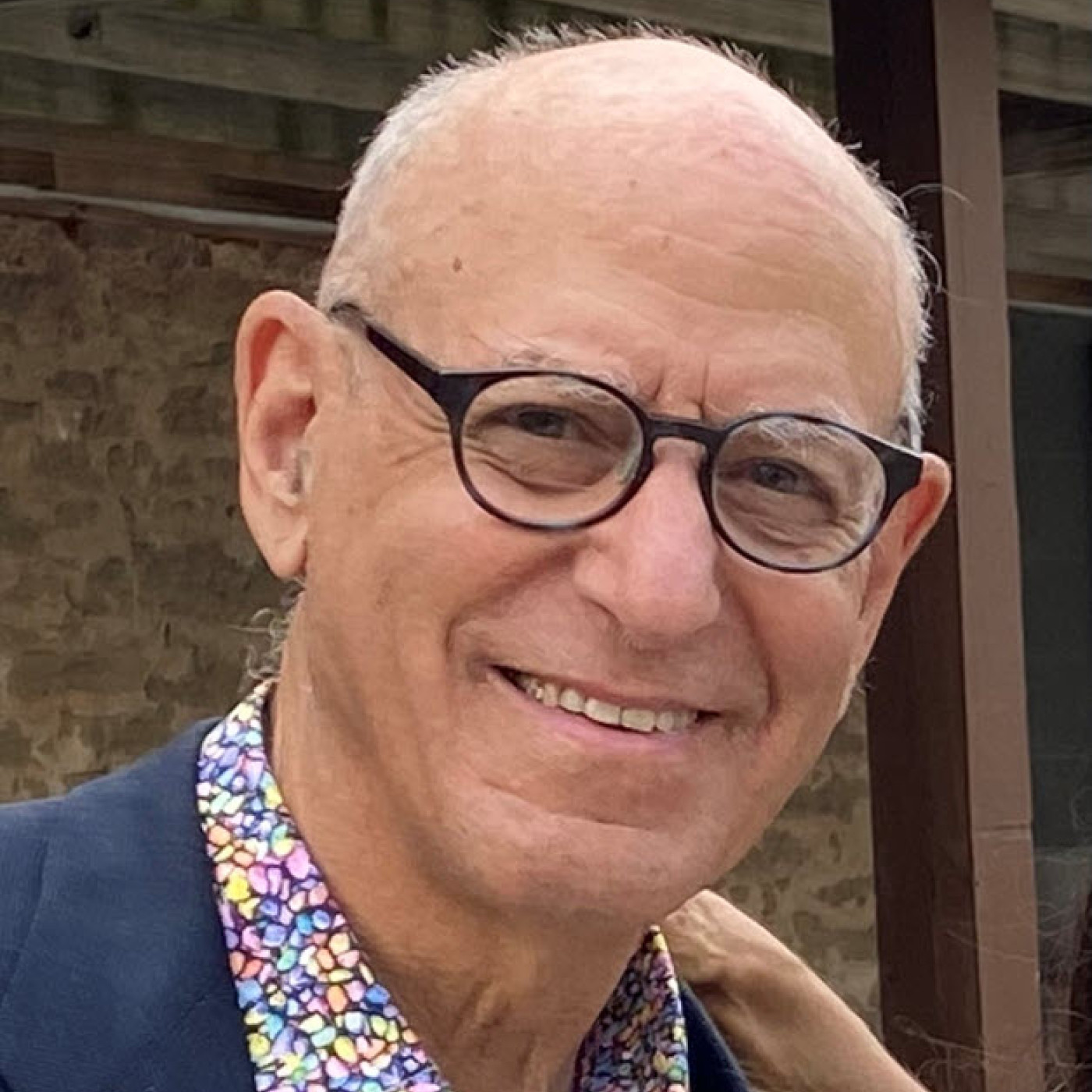
It is truly impossible in just one column to adequately capture the excellence, range, and spirit of Marvin Shafer’s art career. He grew up in a challenging environment in Illinois.
His mother was deaf. And his father, a tool and die maker, suffered a shattered spine in a trolley car accident. He was supposed to die on the couch but instead dragged himself daily to a pantry door where he made a mark. Every day, the mark was a bit higher until he could finally stand and return to work.
That lesson in determination has stayed with Marvin to this day. His brother was the artistic child in the family but instead decided to study biochemistry and become a surgeon, because “there is no money in art.” He then announced to Marvin, “So, now the field is open for you.”
At the University of Illinois Urbana-Champaign, Marvin took every imaginable art class. He earned a scholarship by cleaning the pottery studio and concentrated on making sculptures and jewelry.
After he graduated, he taught art in the Chicago public schools and then in Evanston, where he was head of the Jewelry Department teaching more than 300 students. From there, he moved to the Noyes Art Center in Chicago where he loved teaching.
q3art.com
Along the way, he met the infamous Hugh Hefner. Hefner hired Marvin to sculpt bronze nudes that he displayed all over his mansion. Hefner convinced Marvin, who had a wife and baby, to visit his California mansion. Marvin brought along his family, and while Hefner went through the entire mansion and gardens for over two hours, the baby cried the entire time. But when they left, the baby stopped crying. Marvin took it as a sign to end that part of his business.
He turned to making fabulous jewelry, with most of it solid gold that he sold to high-end stores like Cartier. He made gold chalices for churches and one-of-a-kind pieces that he sold to galleries in New York. However, when a fellow artist was shot in the head by gold robbers, Marvin decided it was time to find a new medium.
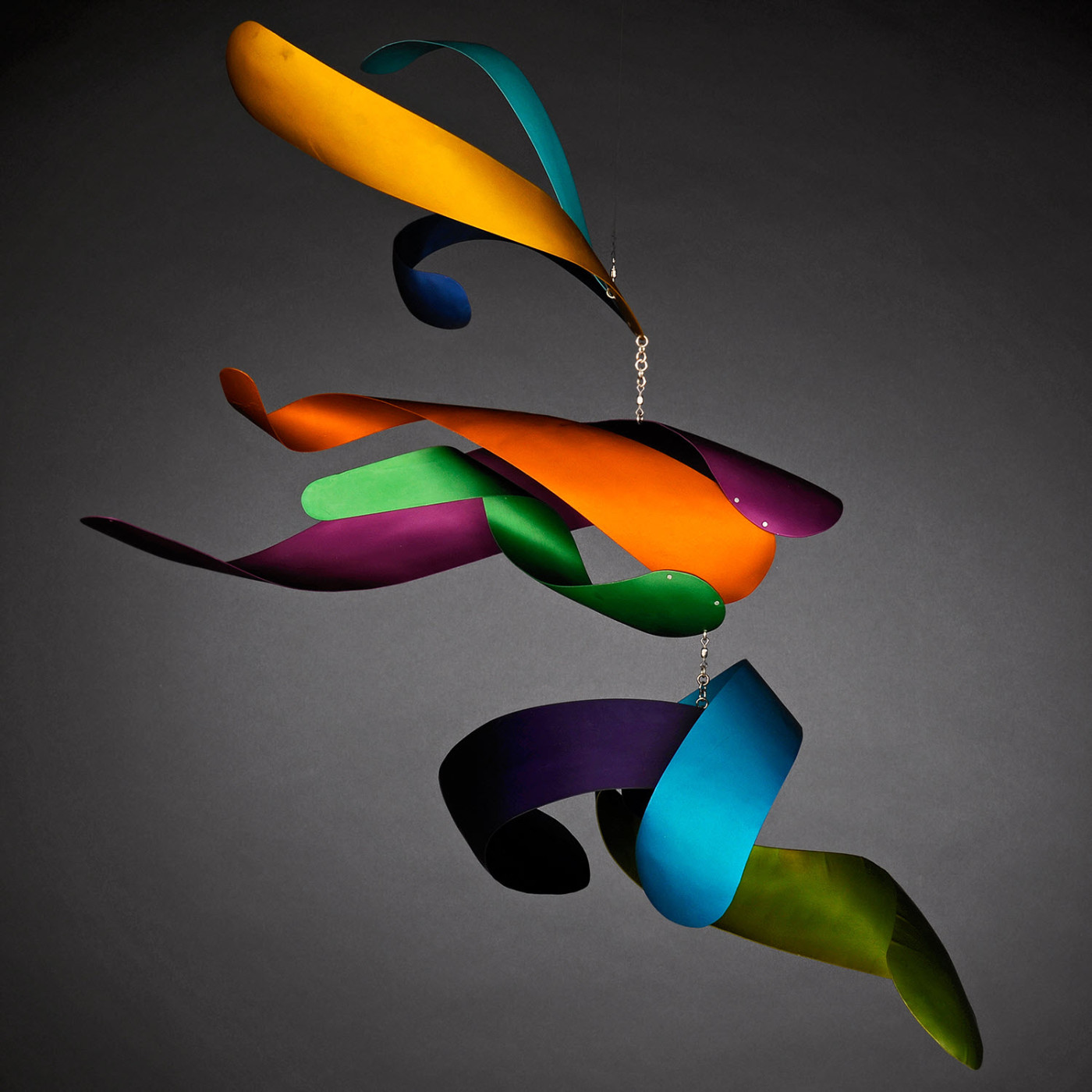
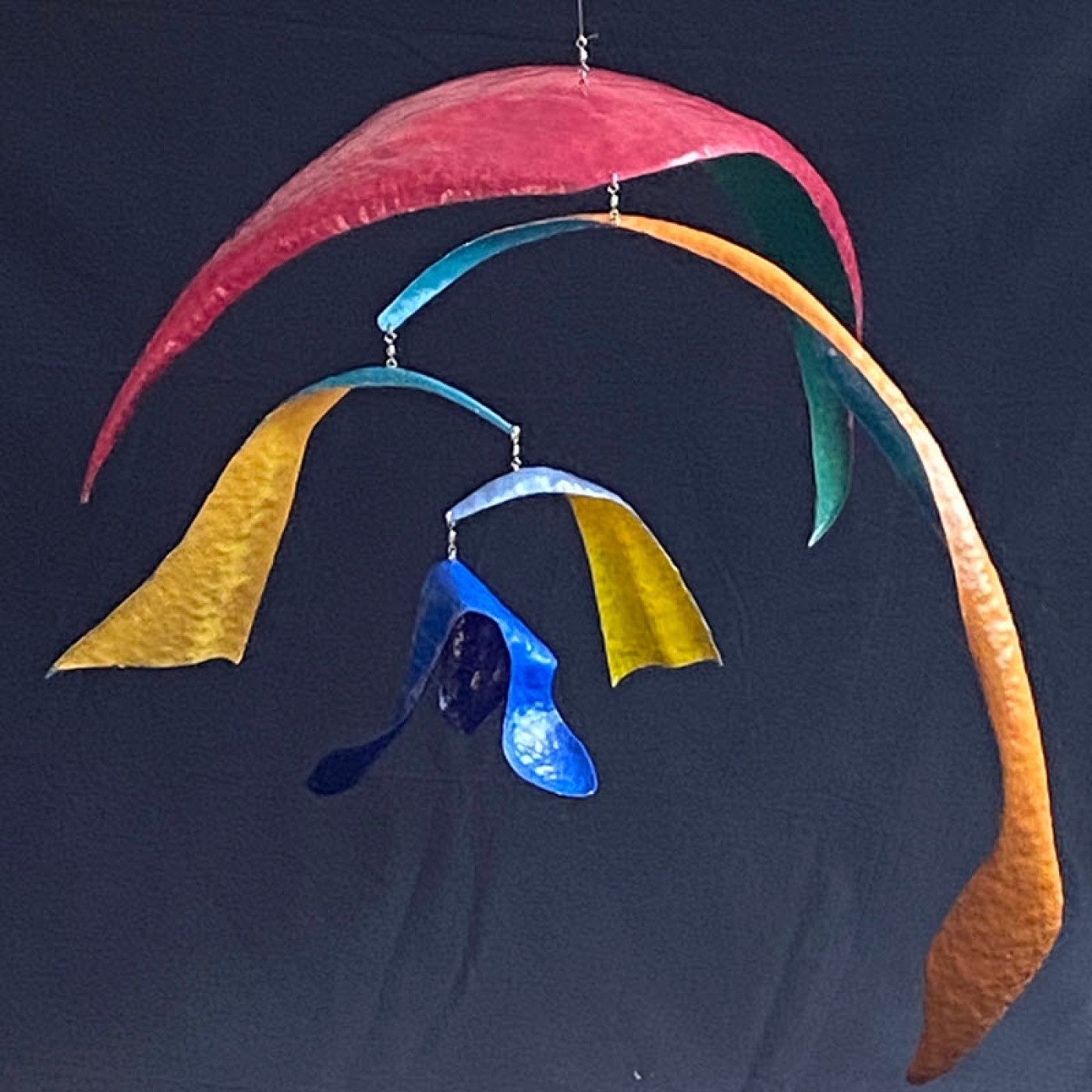
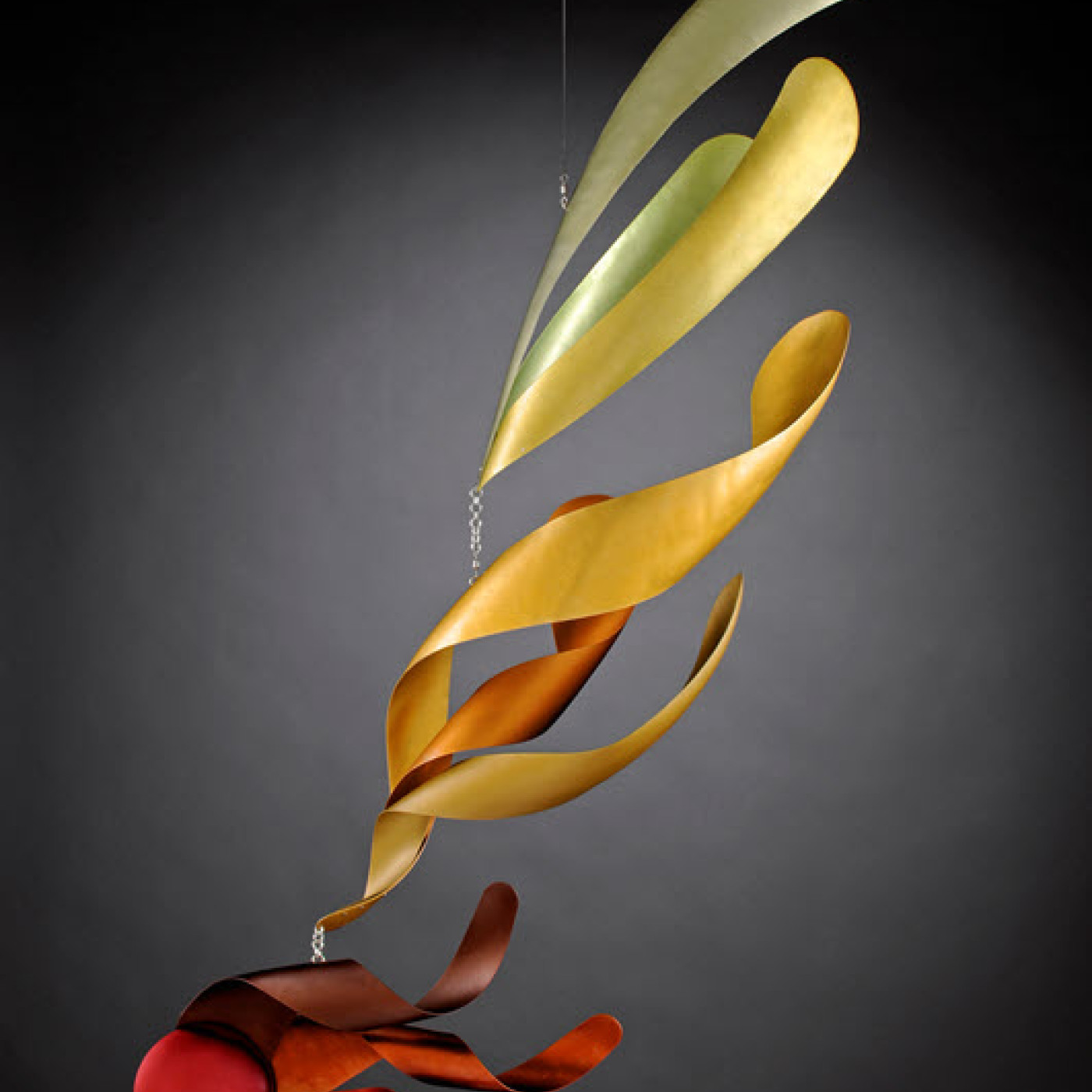
He unexpectedly discovered anodized aluminum, which was lightweight, durable, environmentally friendly, and came in a vast range of colors that would never fade. He worked with his wife, Michelle, cutting the pieces and assembling them into jewelry.
Marvin calls Michelle “the color queen who made this our forever company.” Michelle was also a Grammy nominated musician who easily engaged people with her lively spirit.
Together they began taking their jewelry to trade shows hoping to see them in more shops and galleries. At one of those shows, they were across the aisle from a vendor selling mobiles made with silverware. Michelle offhandedly remarked to Marvin, “Well, you can do better than that!”
At the next show, Marvin displayed a huge 4-foot mobile made from their aluminum scrap. It was a showstopper but way too big and crazy for most customers.
So, Marvin helped them out and said, “What if you just got this part?” And sure enough, they placed orders for the smaller parts, and from one experiment, the mobiles became a large part of their studio work. Visit q3art.com to see the mobiles and jewelry.
Marvin says the large mobiles he makes today are inspired by his dreams and the experiences of “his crazy life.” Like Marvin himself, they are lively, colorful, sculptural, and a fulfillment of his vast artistic experiences.
At the end of our discussion, I asked him if he could sum up the life of an artist in today’s world. He hesitated a bit, and then chuckled as he said, “My brother was right!”
ABOUT THE AUTOR
Diane Sulg is executive director of CRAFT and founder and co-chair of American Craft Week (ACW). She is a handmade advocate who provides valuable information in her one-day seminars titled “All About Wholesale” at wholesale shows throughout the United States. Diane is the former owner of Maddi’s Gallery, in Charlotte and Huntersville, North Carolina.