The Layout Puzzle How the Pieces Fit Together
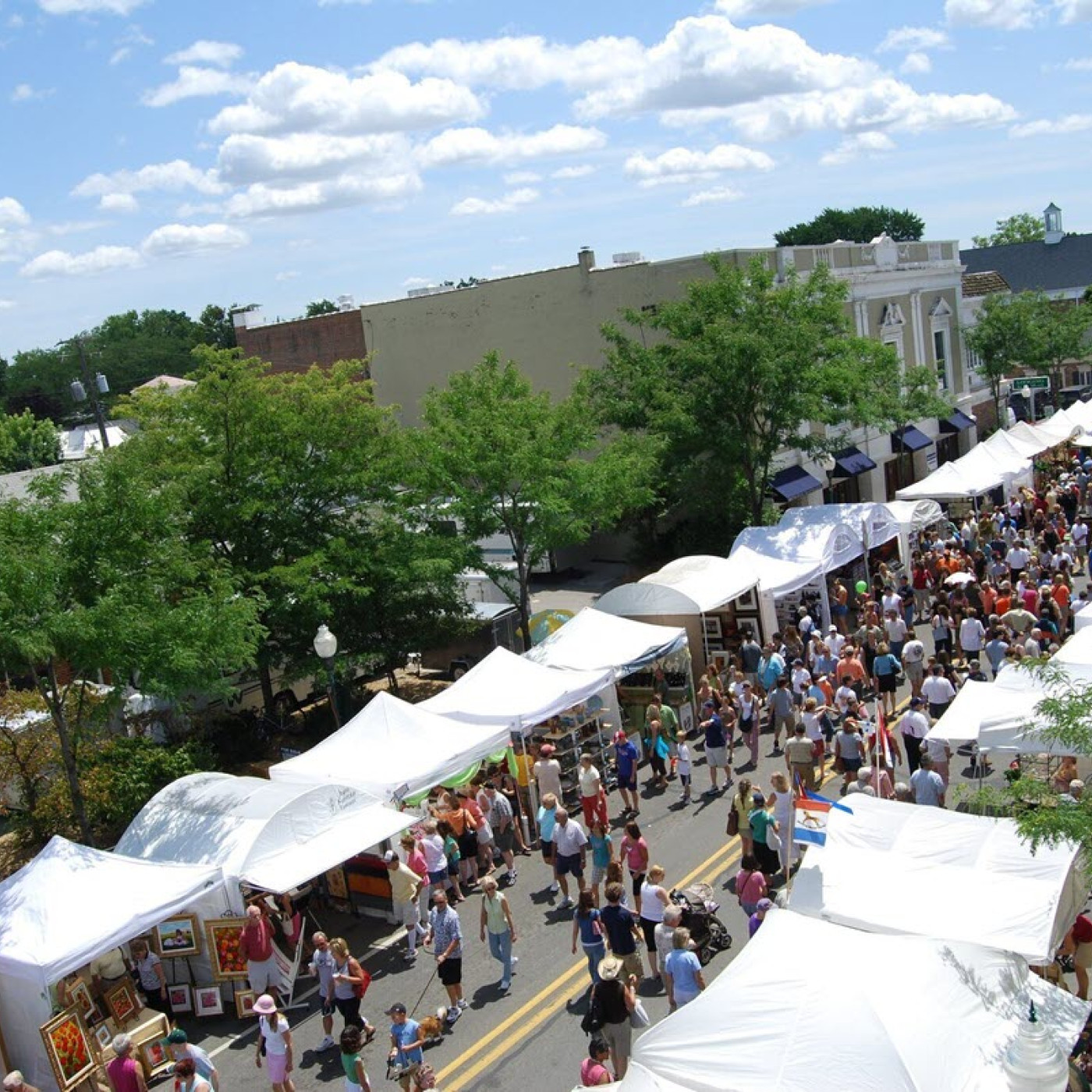
Plymouth Art In The Park takes place in downtown Plymouth, Michigan, each July. The three-day festival features more than 425 artists from across the country.
The layout also accommodates art demonstrations, cuisine, murals, street performers, professional LEGO displays, and more than 90 youth artists. The festival’s footprint spans multiple downtown streets and fully utilizes Kellogg Park.
Artists’ booths are primarily set up along paved streets. Other show elements are in the park on the grass. Each year, our team remeasures and marks every booth location.
The standard booth is 10 x 10. Booths are measured in 11-foot increments to allow buffer space between artists for proper tent weights, circulation, and overall comfort.
Fire lanes and emergency access are critical considerations. Safety planning is done in advance with police, fire, and EMS. Emergency vehicles are staged at the event’s perimeter. In recent years, municipal services have added vehicle barriers at street entrances, further influencing layouts and access points.
Our application includes a Special Request section, and artists are asked if they want to return to the same booth location they had the previous year. When a returning artist requests the same space, we consider that an ideal scenario and do our best to accommodate it. Such requests are spread across every section of the show — reinforcing the idea that the perfect spot for one artist is not the perfect space for someone else.
The booth placement process is quite involved. Our team considers an artist’s medium in order to properly space them away from similar artists or mediums, as well as the score they received during the jury process. We also factor in any special add-ons the artist needs or wants like electricity or a corner space.
Some artists have specific considerations that impact placement. Certain work must face north or east to avoid melting or damage from direct sunlight. Others have medical needs that require proximity to restrooms or accessible parking. We have also accommodated strong sensitivities to fragrances.
Artists are placed strategically based on the logistical needs noted on their application, while also ensuring they are a reasonable distance from others offering similar artwork. That distance can vary from medium to medium, with some categories more heavily represented than others.
Balancing mediums happens at multiple stages. It begins during jurying and continues through booth placement and even later when we pull artists from the waitlist.
Each year, we intentionally change some booth placements to keep the show feeling fresh and new, while being thoughtful about the variables involved for shoppers and artists. We are transparent in this process. Our team contacts an artist directly during placement if we need to chat.
We allow double booths and have never found it necessary to formally limit the number of them. We maintain a healthy balance between single and double spaces throughout the festival.
Corner booths are available and offered for an additional fee. When an artist requests and pays for a double booth or corner space, we consider that request, along with all other placement considerations specific to that artist.
Artists receive a digital packet with detailed information leading up to the event. This packet is typically sent two to three weeks prior to the festival and includes each artist’s booth assignment along with a full map of that year’s layout.
We encourage artists to contact us immediately if anything appears incorrect. Open communication at this stage allows us to address issues quickly and efficiently. While feedback about placement can occasionally result in a change, the goal is to resolve most concerns before assignments are released.
We do not allow buy/sell exhibitors. Food vendors are primarily located in a designated food court area — separate from the art booths to help manage food traffic and lines while keeping artist spaces focused on artwork. We also place a limited number of lighter food and beverage options throughout the festival for those looking to grab something quickly while shopping.
Rather than a traditional main stage, live music and other engaging performers are positioned at key intersections throughout downtown. This allows entertainment to feel integrated into the event without concentrating sound in one area.
On the application, artists are asked if they prefer to be near entertainment, ensuring that artists placed closest to music are comfortable with that environment or prefer it.
Activities for children are in Kellogg Park within the grassy area. This keeps higher energy activities in a central space, allowing the surrounding art areas to remain focused on browsing and shopping.
Clear communication matters. If you loved a show but not your spot, let the promoter know why the space did not work for you and what would work better. That information is valuable and helps shape future layouts.
Layout planning is one of the most challenging parts of producing a festival. The complex puzzle should seem effortless to the shopper and keep them spotting something new and exciting around every turn. A great layout helps every artist maximize their sales.