
Reading the Retailer’s Mind
For just a few minutes, I want you to think like a retailer. If you have been selling your crafts to individual customers, you are thinking, “Well, I am a retailer at times, so I already understand them.”
Although this might be the case, if you have not managed a store with many diverse products, you might be missing the store’s perspective. After all, she is going to become an important partner in your business, so understanding her needs and priorities can be the basis of a long, rewarding relationship.
Let’s assume you are at a trade show exhibiting your wares. Do you know what one of the buyer’s first questions might be? My guess is it will be, “What is your minimum order?” In other words, this buyer likes what she sees at first glance and is already calculating whether she can afford it and how it fits in her buying budget.
So, here are two early suggestions. First, make your minimum affordable and second, have your work span a sizeable price range. For instance, if you are selling wooden bowls and your minimum is $400, having every item in your line cost $125 is not wise.
Instead, have the expensive items and add smaller items that might be $30 to $50 or some salad hands to go with the bowls that are $25. Now this store owner can see an order of your bowls becoming a lovely display in her store with one large bowl, several medium and small ones, and some accessories, too.
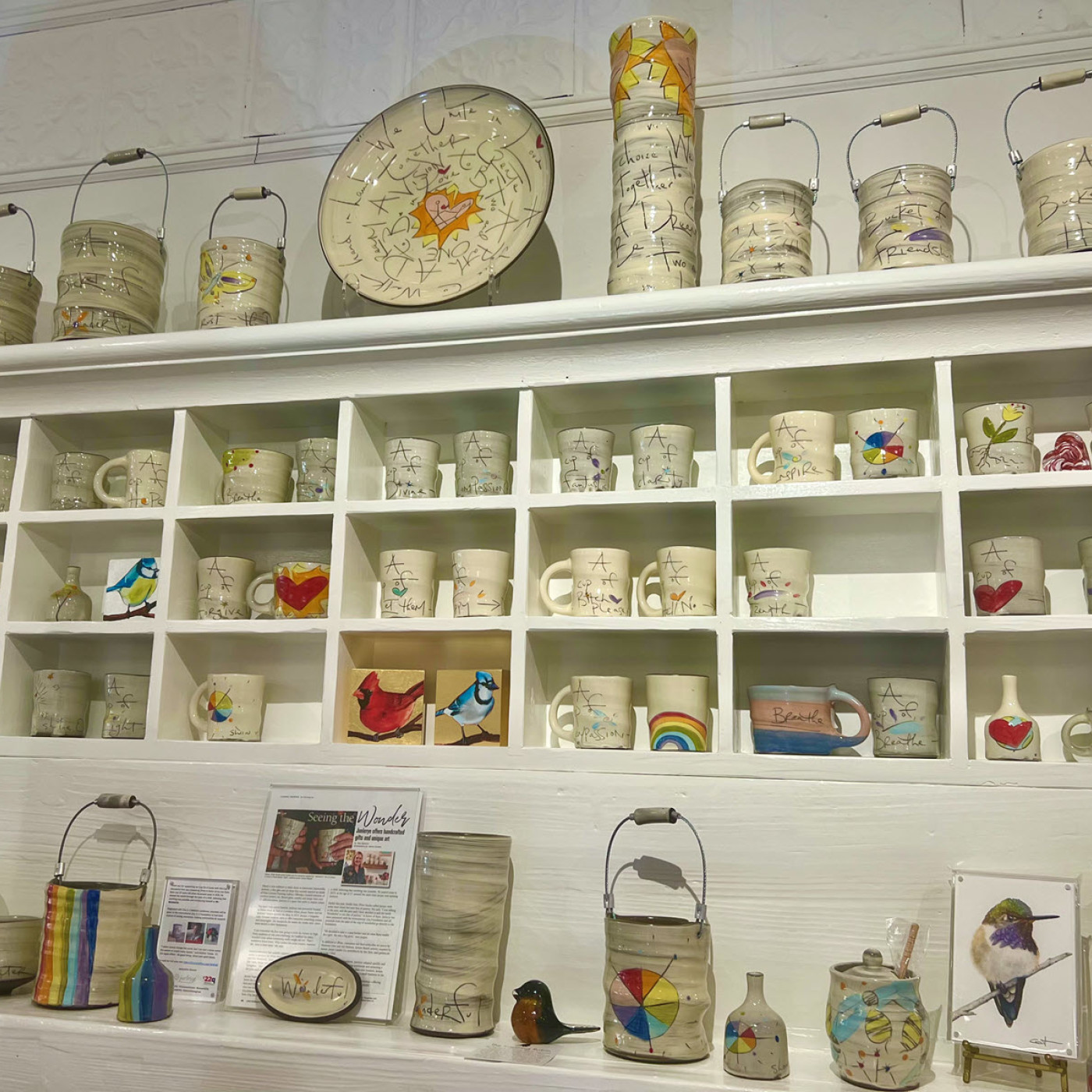
Consider the picture of ZPOTS from a local gallery. There is an enormous selection of pottery with a wide variety of price points. Not only is the display enticing, but ZPOTS has included attractive information about their pottery that the gallery owner has in an acrylic frame, giving customers interesting information about this great handmade line.
When you are pricing your work, keep in mind the multiplier the store owner is going to use to price your goods. The old days of keystoning or doubling your wholesale price have gone the way of the horse and buggy.
In most areas, rent for retail space has skyrocketed. If her store is in a chic, busy area, she will also need employees, security, and enticing window displays. This means she is probably using a 2.3 multiplier, and so should you when you are selling those same items on your website or at an art fair. Do some quick calculations to see if your pricing is practical.
Let me give you an example. Let’s say you are making a large felt handbag, and after you have added the cost of materials, labor, overhead, and a bit of profit, you make the wholesale price $135. That means the retailer will charge more than $300.
Each time you jump through a psychological barrier, you should measure the consequences. If you made minor changes to that bag, saving five or six dollars, then the retailer could be selling it in the $200 range. Believe me, when she sees your cost, she is already calculating the retail pricing to see if it fits her customer profile. It is always smart to make a few small adaptations that can result in a potentially higher sales volume!
It is also critical when selling your own work, whether on your website or at an art fair, that you use that same multiplier. A savvy retailer will check your retail pricing, knowing she cannot compete with a supplier who is undercutting her. Keep your wholesale pricing consistent on any online wholesale platforms like IndieMe or Faire and keep your retail pricing consistent with hers. She has plenty of competition without adding you.
Also examine how your product is or will be packaged. When selling pre-packaged products, ensure the retailer sees the packaging and understands that it will match the aesthetic of her store.
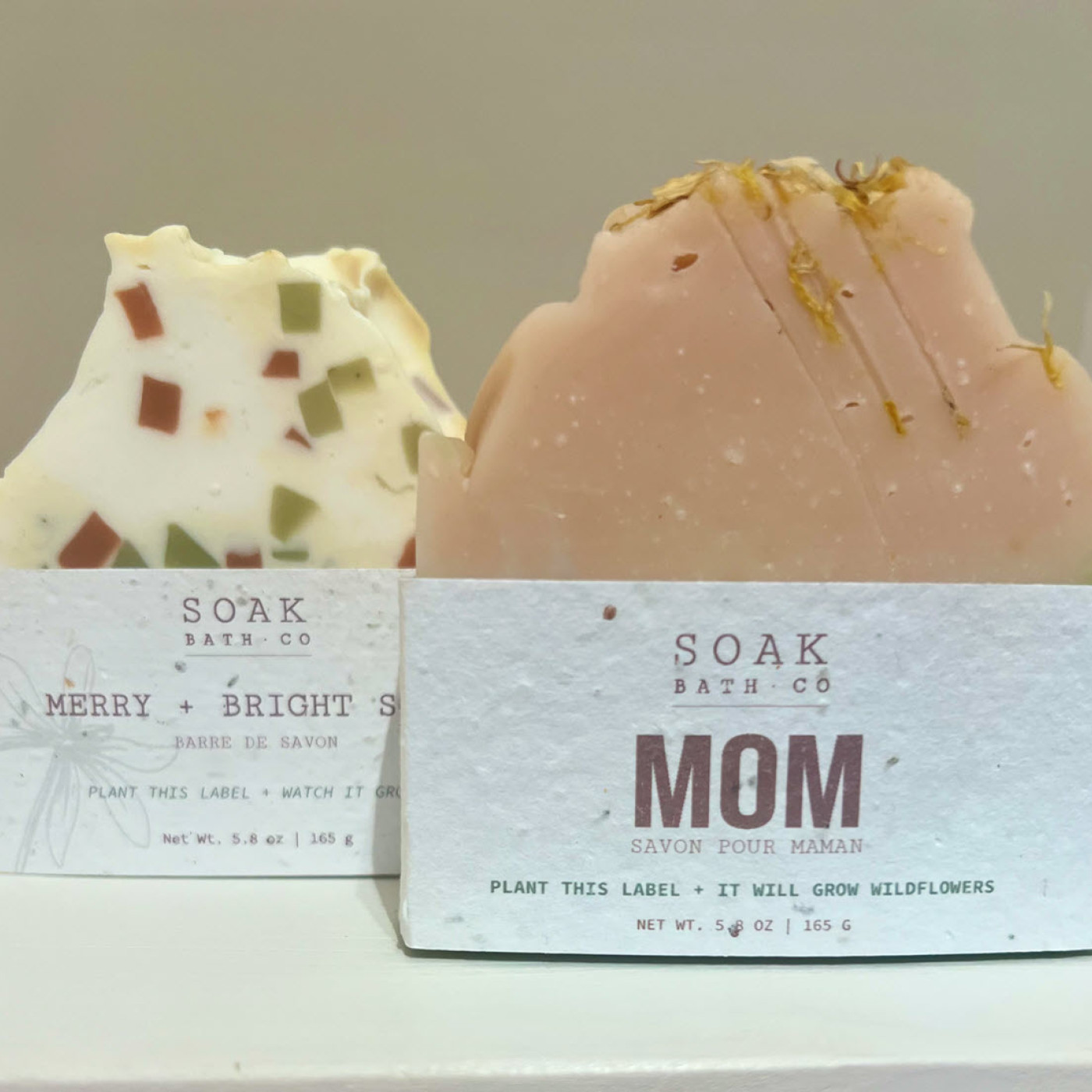
SOAK Bath Co has some ingenious packaging for their product. Not only is it eco-friendly and sustainable, but the customer is also urged to plant the soap holder and enjoy the wildflowers that will grow from it!
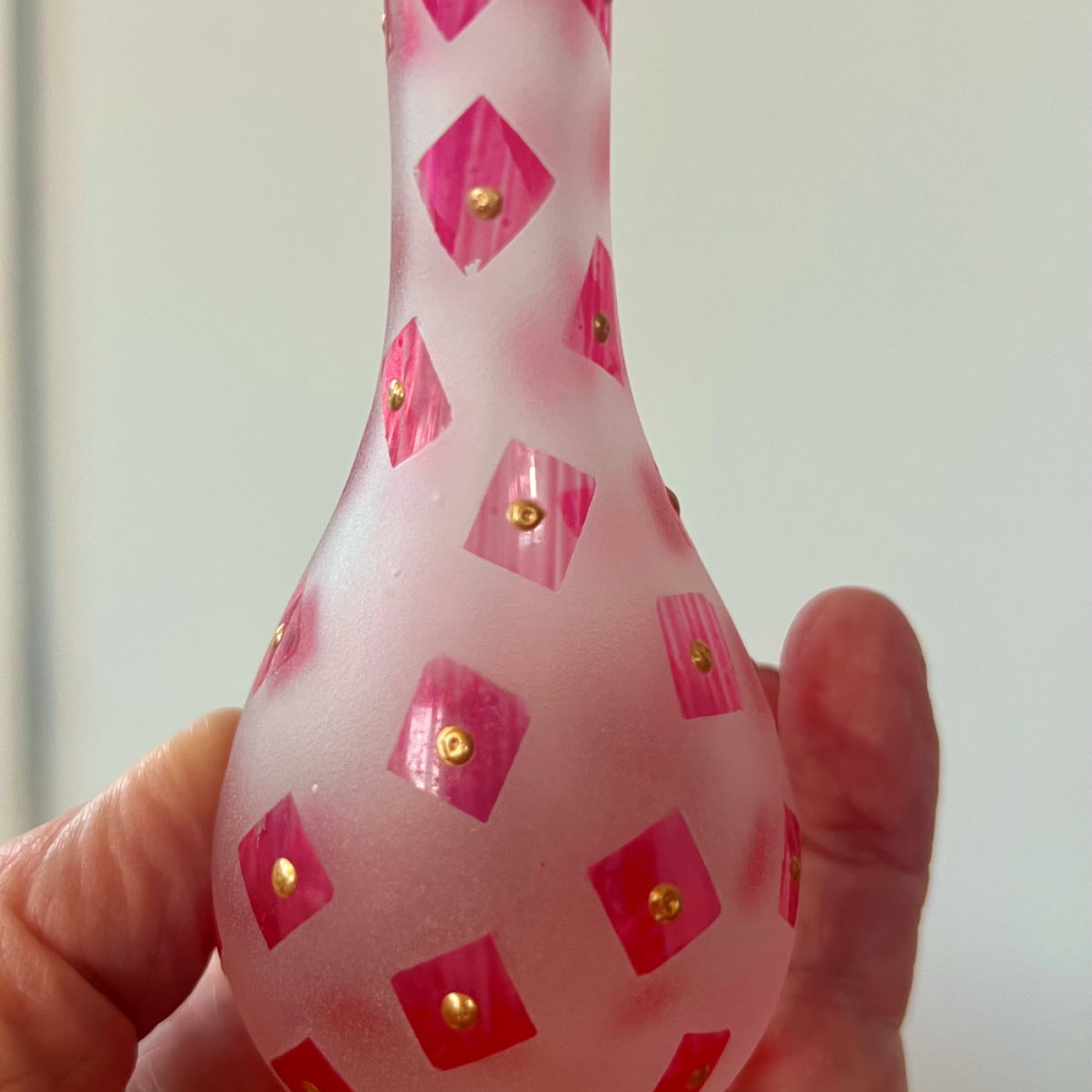
If you are selling your products online to retailers, take extra care with your descriptions and photos. Your main goal should be no surprises that might cause her problems. Give her the complete dimensions, and if your item is small, put at least one photo of it on your sales site with something like a hand to illustrate its size.
Use descriptions that help to inform the buyer. One time, I ordered a glass tree the maker called “large” and when it arrived, it was two inches high! It would be better if the maker had named it “Large TINY Tree!”
Speaking of selling online, help your buyer choose what to buy. Identify your bestselling items. Put together an Introductory Package that features an assortment of sizes and prices and meets your minimum requirement.
Do something similar at a trade show. I remember asking an exhibitor what his bestselling item was, and he pointed to a piece that was way in the back of his booth. Put that piece up front — on a pedestal — and label it with a star! Help the buyer have confidence in you and your products right from the start.
It is obvious that you need to ship on time and include a packing slip, so the buyer can make certain she has a complete order. If there is a tiny item, like a teapot lid, wrap it with a label, so she cannot miss it.
Also include a brief thank you note in every shipment. If for any reason you are running behind, it is imperative that you give the buyer a heads-up as soon as possible. Be realistic and honest when telling her your new ship date, and then do everything you can to beat it.
She will also appreciate any value-added measures you take. This might be a complimentary display piece or great product photos for her website and advertising. An example of something simple we sold was a glass ornament whose maker put his small nametag on a plastic loop on every piece. It meant we could hang the ornaments immediately and use the back side of his card for our price tag, saving us a lot of work.
His glass ornaments were also our bestselling ornaments, and I believe it was due to his small, but goodlooking tag. It included his exquisite logo that immediately upgraded his product.
If you are exhibiting at a trade show, make sure your booth is inviting and eye catching. With hundreds of products to review, make your work clear for the retailer. Have a short, informative opening statement like, “All my jewelry is sterling silver and handmade in my Ohio studio.”
Guide potential buyers with your product display, arranging a grouping and labeling it “Bestsellers.” Never skimp on the lighting in your booth — your products deserve to be in the spotlight.
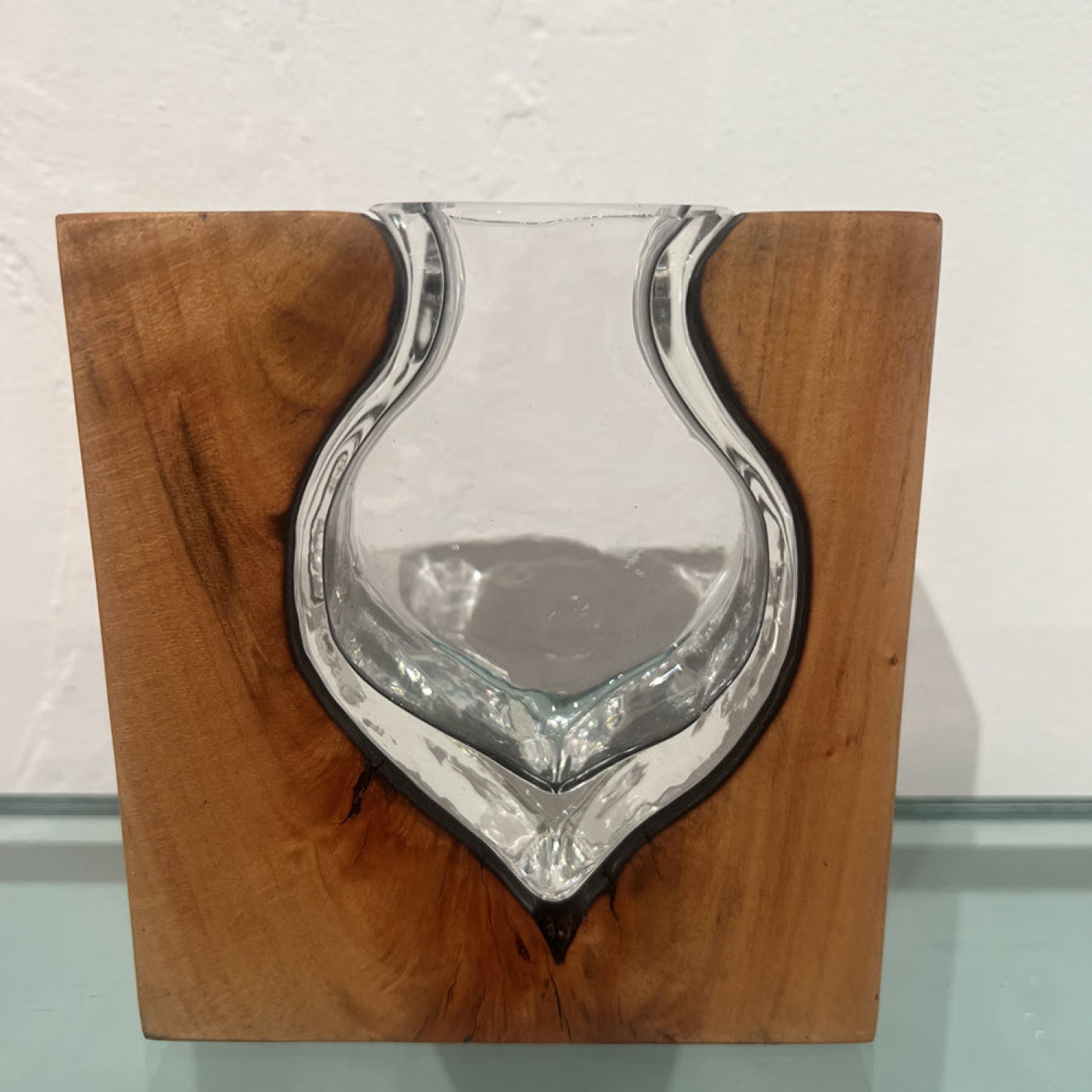
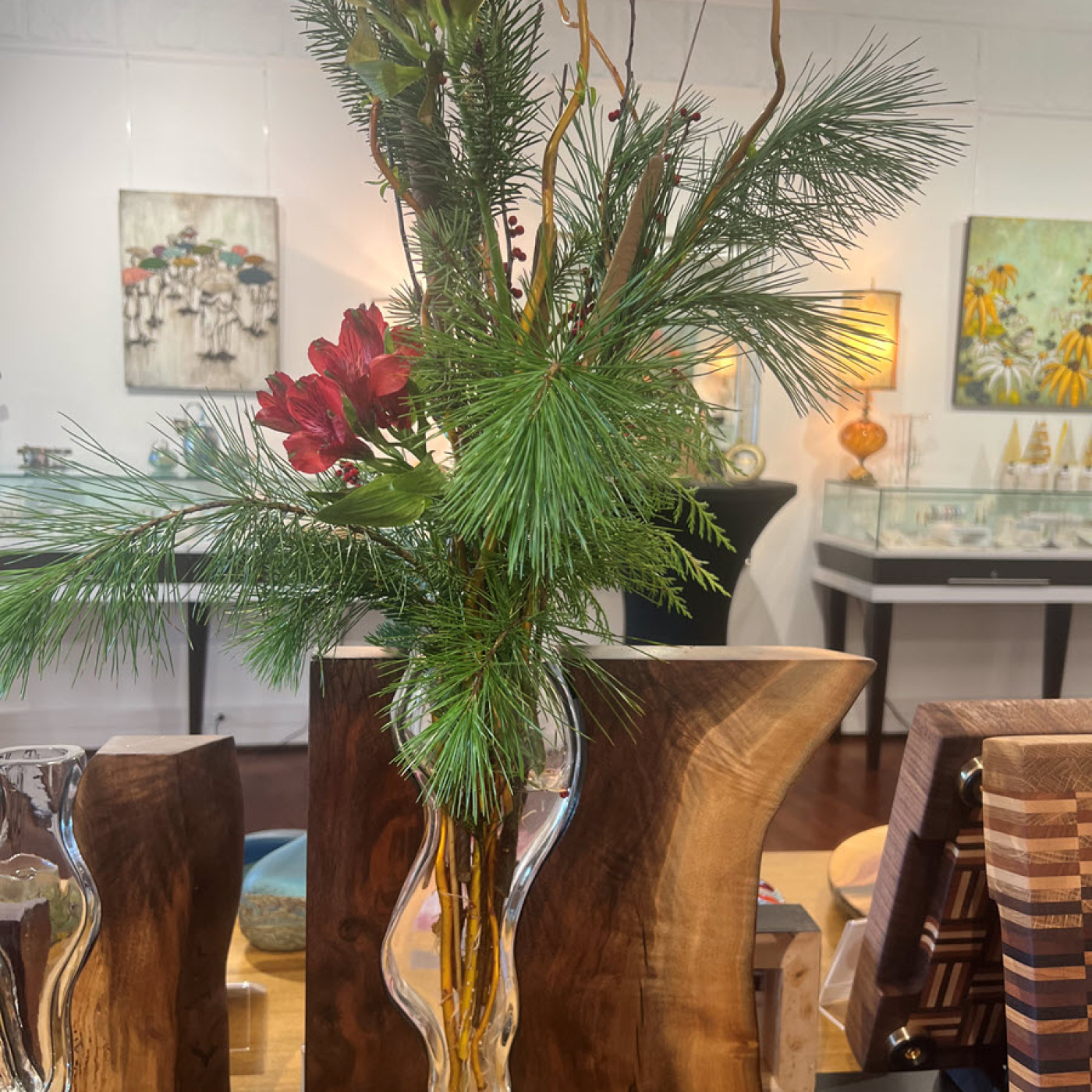
Also, give your booth a feeling of liveliness. You will see many exhibitors adding flower bouquets or greenery to their products. This gives the retailer ideas she can use in her own store displays and pass on to her customers.
Make sure you check your production calendar before your promised delivery, especially if your work is intricate and time-consuming to produce. Many retailers share similar delivery expectations.
They want spring jewelry in their store in April, so it is ready for Mother’s Day. And those glass pumpkins? Expect them to ask for an August delivery. And, of course, the end of October is ideal for everything about Christmas. When you know these expectations, you can better manage your workflow to accommodate your customers.
Personal connections with retailers are irreplaceable. Check in occasionally with a brief email or an early morning phone call. Ask if they need anything else from you, if they are going to any trade shows, or just to see how business is in their area. Your goal is to be their partner, so understanding their goals, needs, and successes is a crucial step to thinking like a retailer!
About the Author Diane Sulg
Diane Sulg is executive director of CRAFT and founder and co-chair of American Craft Week (ACW). She is a handmade advocate who provides valuable information in her one-day seminars titled “All About Wholesale” at wholesale shows throughout the United States. Diane is the former owner of Maddi’s Gallery, in Charlotte and Huntersville, North Carolina.