Let’s Talk About Finding the Right Shows Artists Share Resources, Tips, Advice
It takes a lot of time, effort, and experience to find shows that are the best fit for what you do. Discover which resources some artists find most reliable in this process.
Sandy Winkelman
Acrylic
How long have you been participating in shows?
Three years.
How do you decide if a show is a good fit for your medium or style of work?
When looking for a good show to attend, I rely on several key resources to help me choose wisely. The Sunshine Artist top 200 list is my main guide — it highlights high-quality, well-attended art fairs and festivals across the country. I also use ZAPP to research shows, review photos, and check event details. Because I hand-paint mandalas on vinyl records, I look for shows that align with my niche — events that attract music lovers or have a musical tie-in tend to be the best fit. Demographics and atmosphere matter a lot; I want an audience that appreciates both art and nostalgia. When choosing which art shows to participate in, I start by using the Sunshine Artist top 200 list as my guide. From there, I focus on locations I’m comfortable traveling to — logistics matter as much as the show itself. Dates are another key factor. As an older artist, I’ve learned to pace myself and spread out my schedule, so I can give my best energy to each event. Because I also receive a lot of commissions, I prioritize shows with strong attendance and good visibility. The more people who see my art, the greater the opportunity to connect and create new pieces. Finally, I always read participant reviews on Sunshine Artist. Honest feedback from fellow artists can often tip the scale when I’m deciding whether a show is a “yes” or still in the “maybe” column.
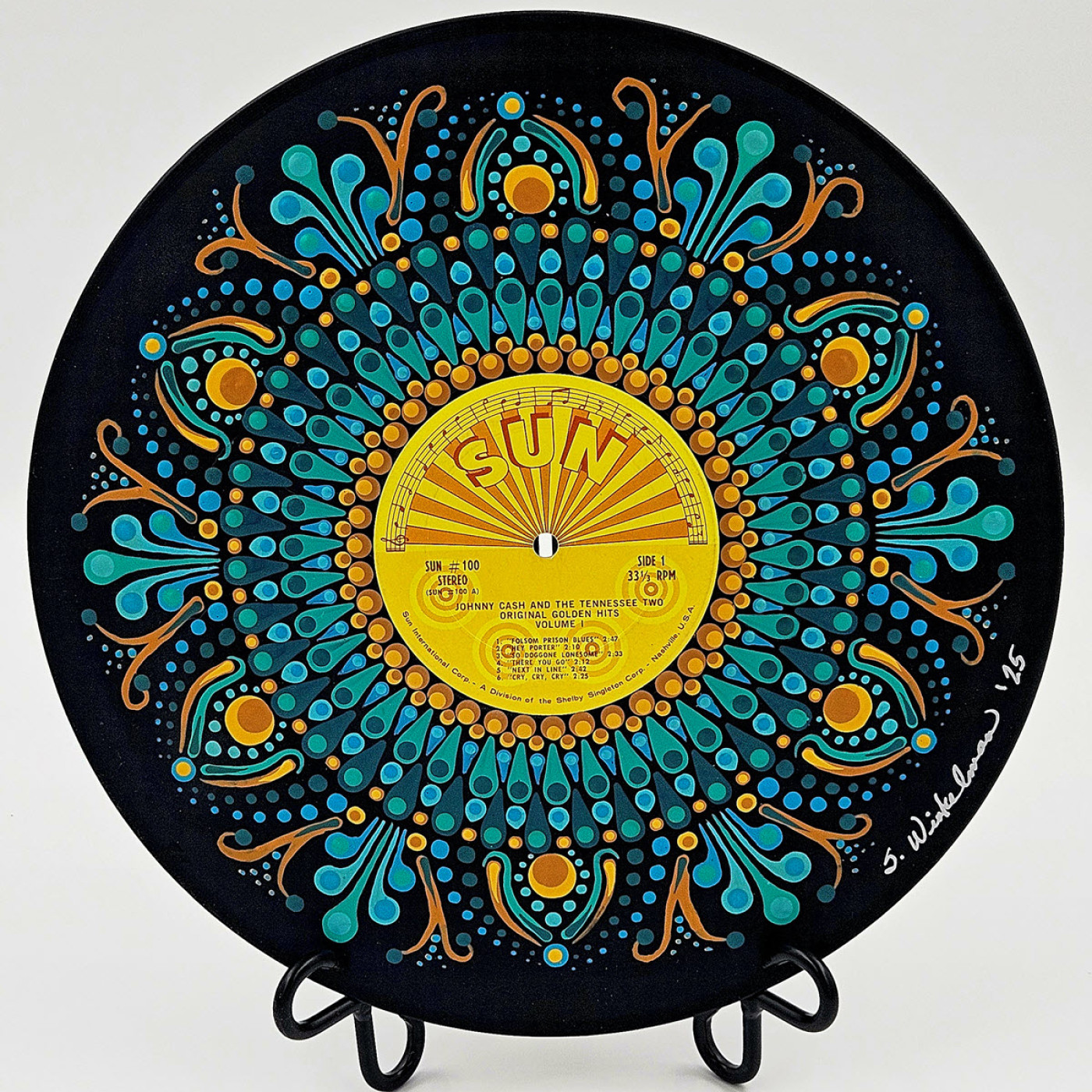
Photo courtesy of Sandy Winkelman
Which resources are the most reliable for finding shows that are a good fit?
Since I paint mandalas on vinyl records, the most reliable shows for me are music festivals that include an art component or take place in communities with strong music appreciation. I focus my search online for events that attract music lovers, as those audiences naturally connect with my work and understand its inspiration.
What steps would you recommend to other artists researching shows?
I’d recommend looking for shows that match your art’s theme and audience. For me, that means music festivals or art events in music-loving communities. Also consider factors like location, attendance, show reputation, and booth fees to be sure it’s a good fit.
What is the best advice you have received from another artist about choosing shows?
The best advice I’ve received was to “just do it and see what happens.” As a new artist, I lacked the confidence to put myself out there, but that simple advice pushed me to take the leap — and it made all the difference.
How has your approach to finding and evaluating shows evolved?
I now focus only on juried art shows instead of general art and craft shows. I’ve learned that while craft shows can be fun and well-attended, juried shows tend to attract a more serious art audience — people who appreciate and invest in fine art.
Do you have additional thoughts or advice on this topic?
When you attend a new show and it turns out to be disappointing, don’t see it as a failure — it’s a learning opportunity. Every show, good or bad, helps define what you’re looking for and what type of audience best connects with your art.
Norman Veit
Wood
How long have you been participating in shows?
Four years.
How do you decide if a show is a good fit for your medium or style of work?
First, it must be a juried show. I read about past shows, check out previous winners, and consider location and timing.
What are signs or red flags that tell you a show is not a good fit for your work?
Not juried is the biggest red flag. Also, I look for large numbers of non-artist vendors. If resale is allowed, it is not my show.
Which resources are the most reliable for finding shows that are a good fit?
Initially, recommendations from other art vendors for appropriate shows/festivals were my primary choice, and most of these turned out to be very good recommendations.
What steps would you recommend to other artists researching shows?
Visiting in advance is the best if you have the opportunity. Obviously, for out-of-state, distant shows, you have to rely heavily on web resources, festival sites, Sunshine Artist, Facebook to name a few.

What is the best advice you have received from another artist about choosing shows?
For my work, only consider juried shows with a ratio of applications to invites that show selectivity.
How has your approach to finding and evaluating shows evolved?
My approach is much the same but far more cautious about adding shows that I have not attended prior to application.
Kate Jones
3D Mixed Media
How long have you been participating in shows?
Forty-five years.
How do you decide if a show is a good fit for your medium or style of work?
Type of crowd, categories, and other exhibitors. I prefer professional customers — mostly adults, families, technical people, and large crowds. Exhibitors with higher-priced items rather than only low-priced trinkets. My work is rather specialized with mathematical features (original game puzzles). Mainly, if I try a show for the first time, how well I do with sales and whether I want to do it again.
What are signs or red flags that tell you a show is not a good fit for your work?
Doing it once and the results! Informal displays, low-priced items, small crowds, and too many children are not a good fit.
Which resources are the most reliable for finding shows that are a good fit?
Organizers I've shown with for many years. I'll try any new ones they offer. Also, I'm hesitant to try new shows with excessive booth fees.
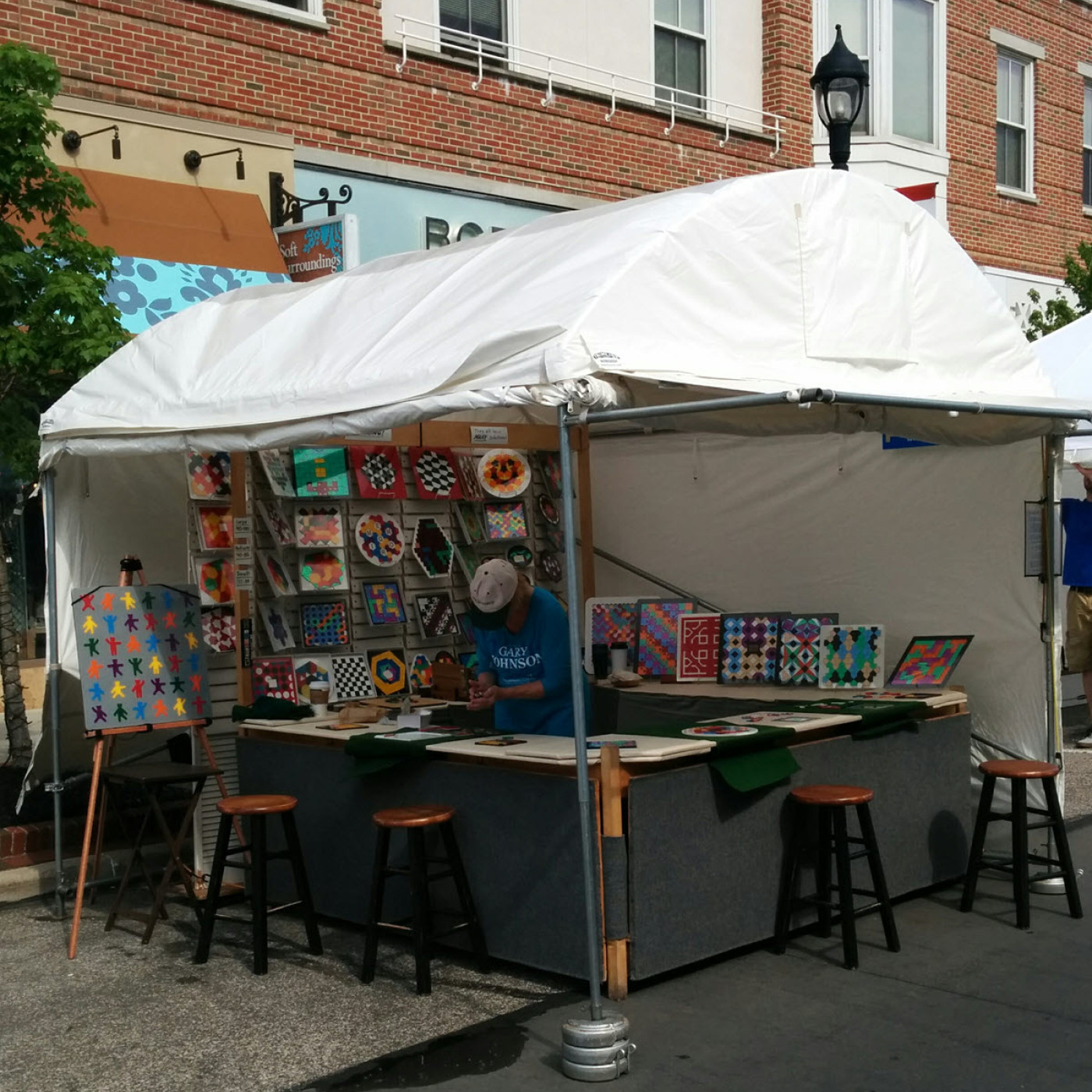
Photo courtesy of Dick Jones
What steps would you recommend to other artists researching shows?
Consider a community’s demographics, the show’s history, and its past attendance. Visit it in advance. Also, check with artists you know — what they think of a show you're considering that they have done. Some states have better shows; some have friendlier visitors with less money.
What is the best advice you have received from another artist about choosing shows?
Emphasis on the arts, not on food, beer, music, or other entertainment.
How has your approach to finding and evaluating shows evolved?
During the early years, booth fees were manageable, and I did 40 shows a year. The big shows these days cost more than I can risk.